01
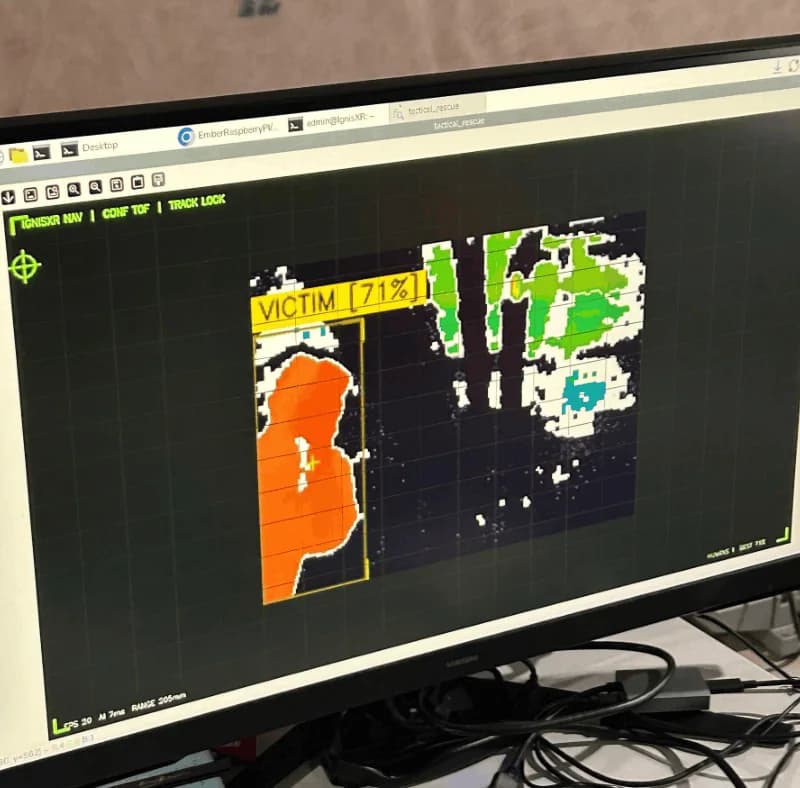
Victim detection
Thermal segmentation picks a body out of the scene and tags it with a confidence score, so a responder knows what the system is sure about — and what it isn't.
Ignis XR — Now Introducing
See the unseen.
An XR ecosystem fusing LiDAR, thermal imaging, and real-time scene analysis — built for the future of first responders.
The Problem
Smoke and darkness strip away the one sense crews rely on most. Thermal, spatial, and situational data all exist — they just live in separate tools, never in one view.
Thermal Imaging
Heat signatures render directly into the responder's field of view — locate victims through smoke, trace fire spread, and read hotspots before you reach them. No handheld camera. No looking away.
LiDAR Spatial Mapping
Real-time 3D mapping of hallways, rooms, and exits in zero visibility. Crews always know where they are and how to get out — and command sees the same map they do.
The Hardware
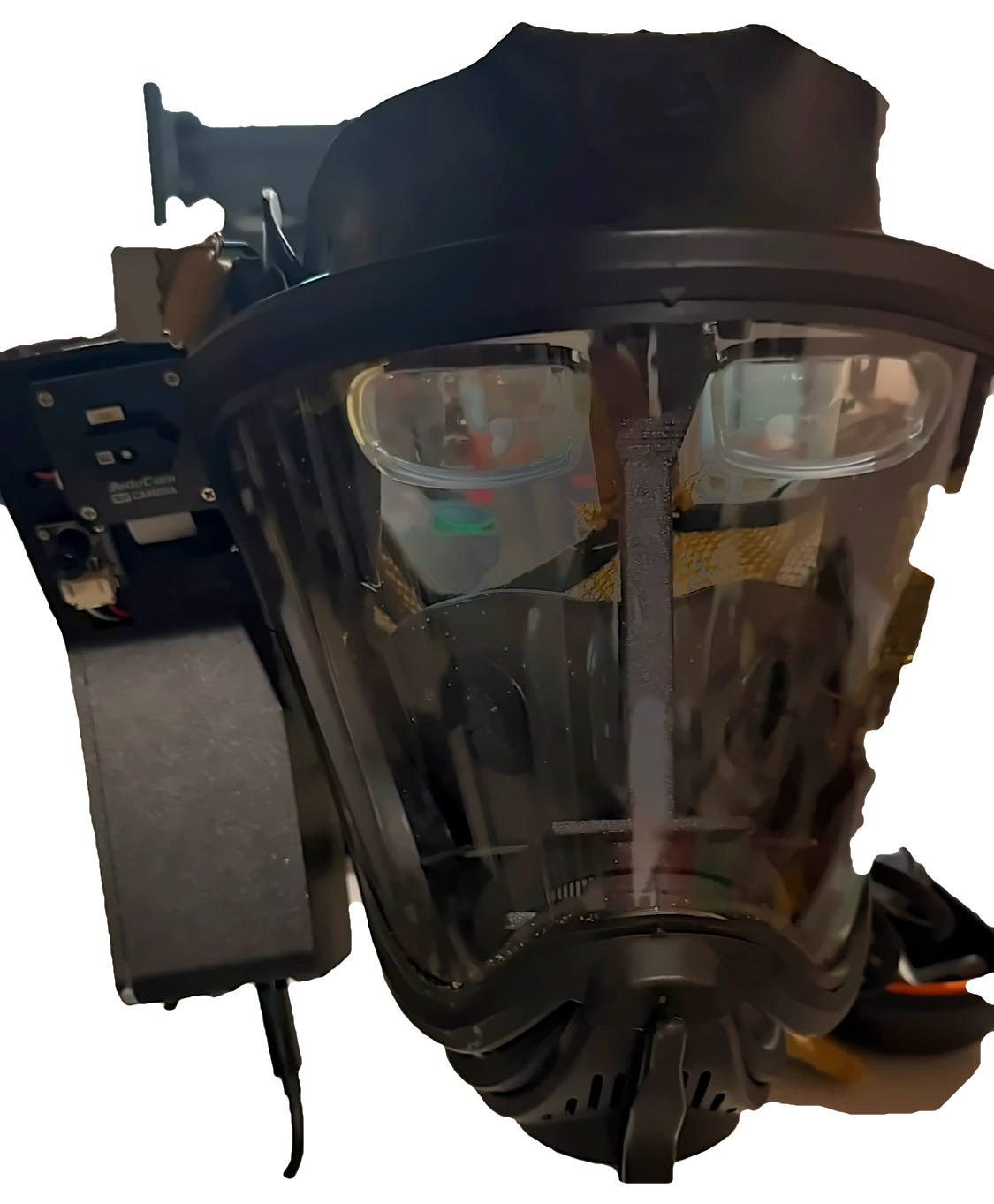
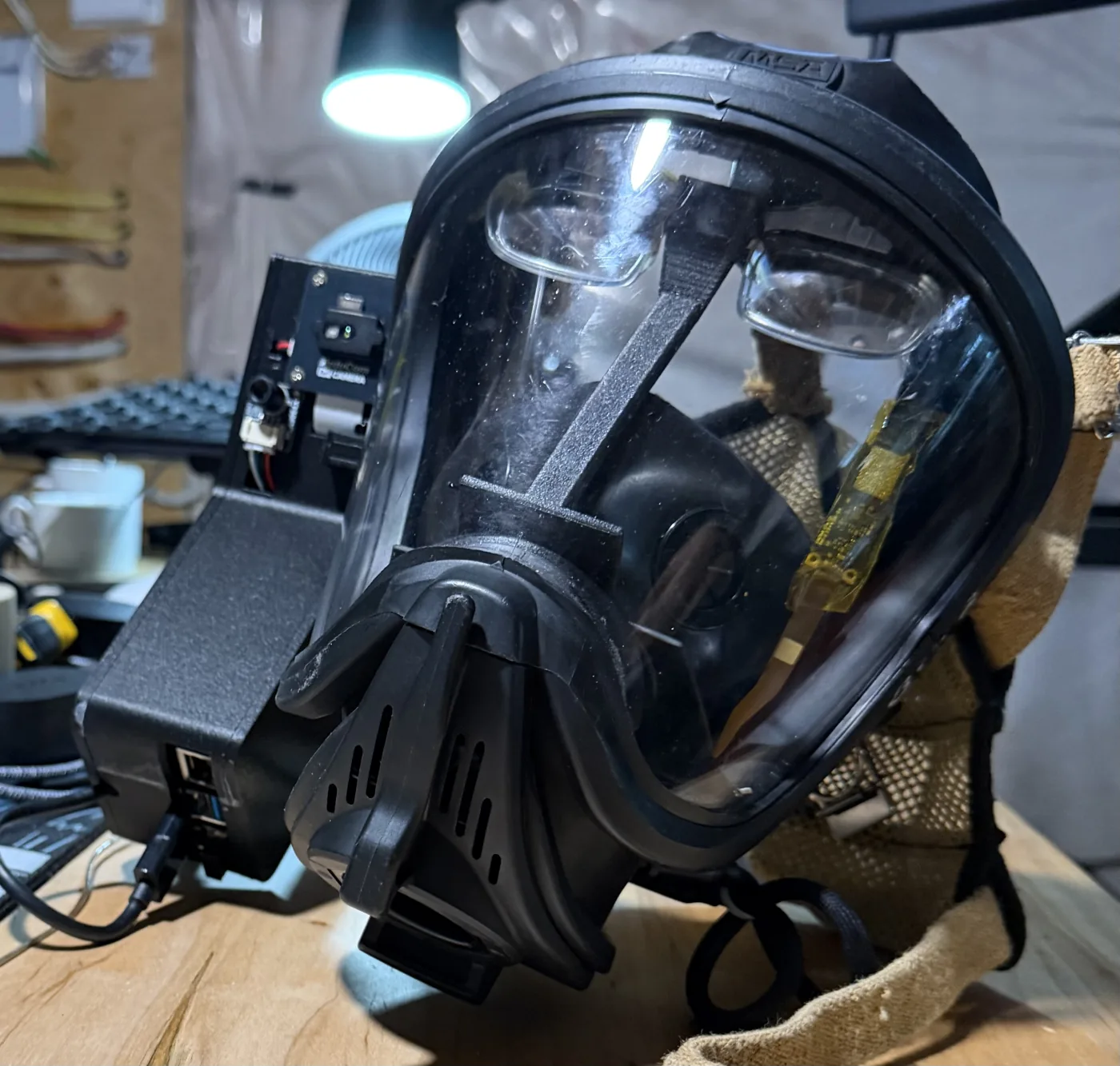
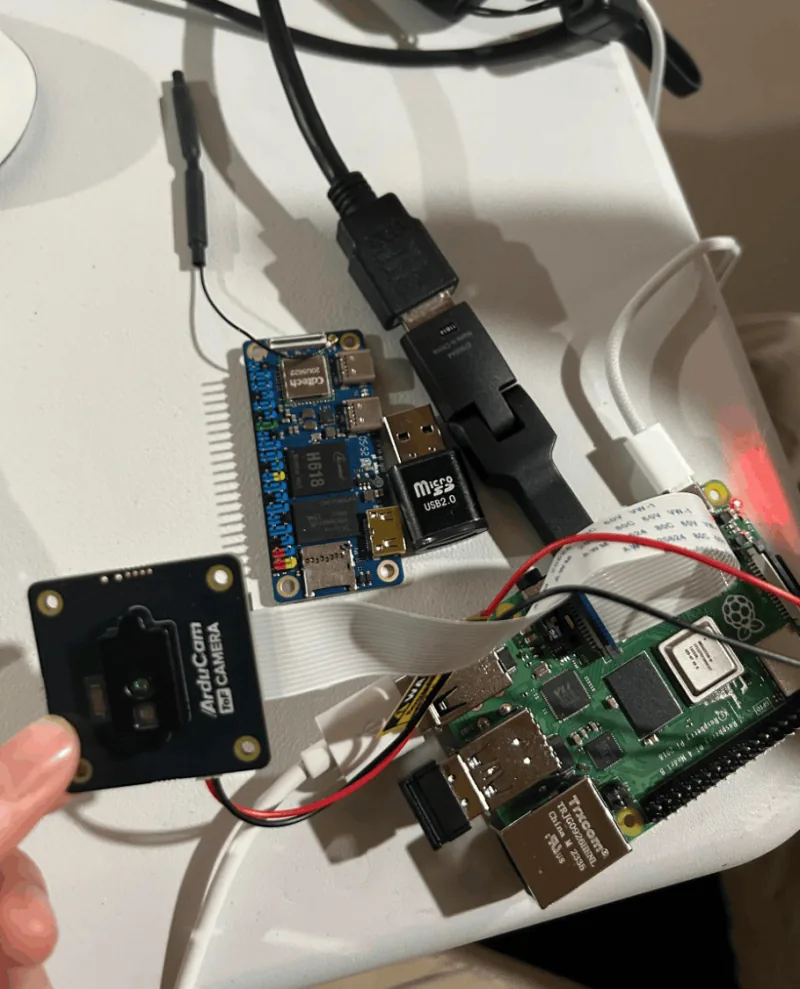
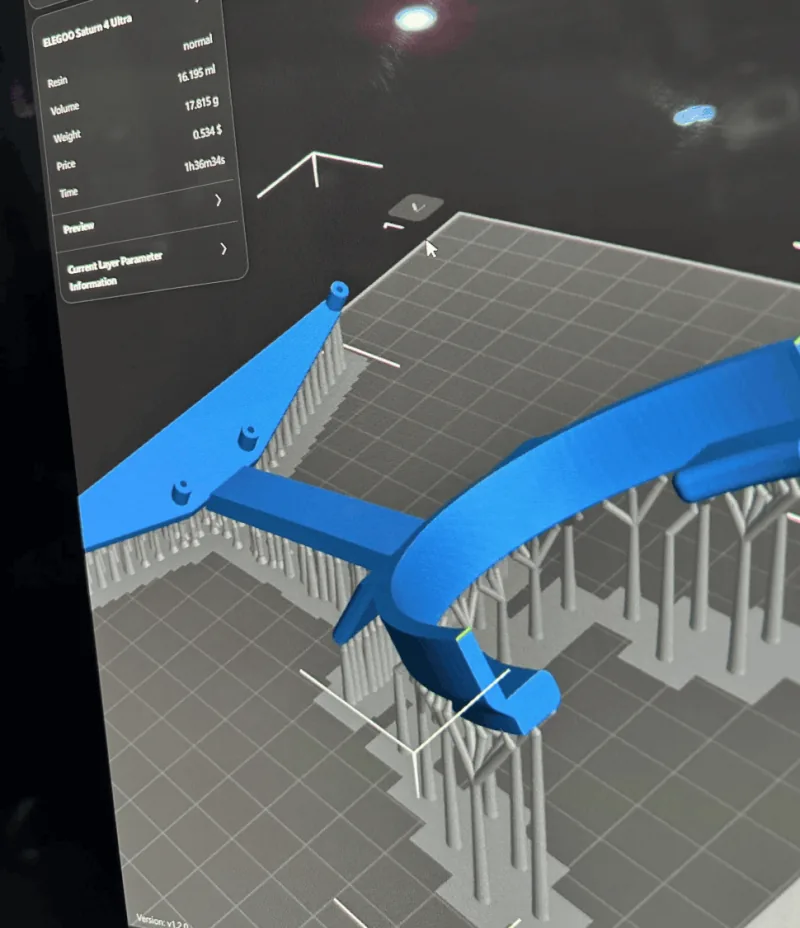
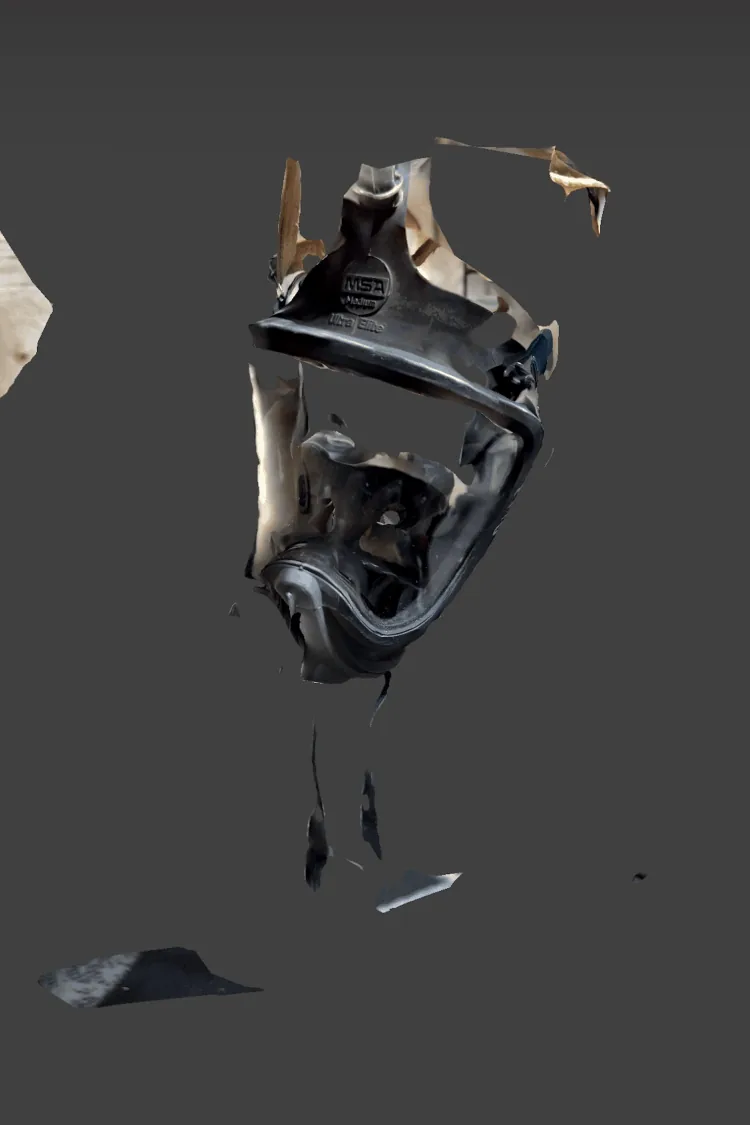
Ember mounts to a standard SCBA mask. No retraining, no new certification — the sensors, compute, and HUD ride along with the equipment already strapped to every responder.
Running Software
Not a mockup — frames captured off the Ember prototype running on its own compute. Detection, spatial scan, and crew status render into one overlay, in the responder's line of sight.
Thermal segmentation picks a body out of the scene and tags it with a confidence score, so a responder knows what the system is sure about — and what it isn't.
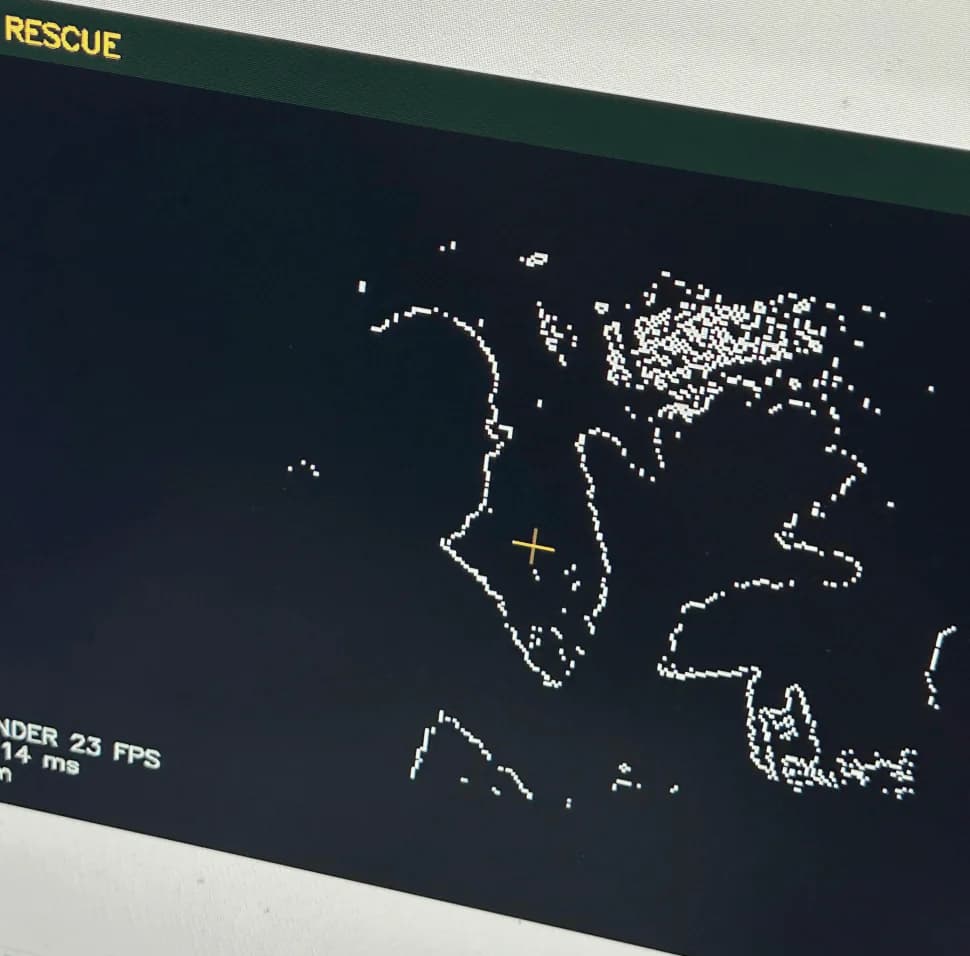
The time-of-flight sensor traces room geometry as contours in real time — walls, doorways, and obstacles drawn from range data rather than light.
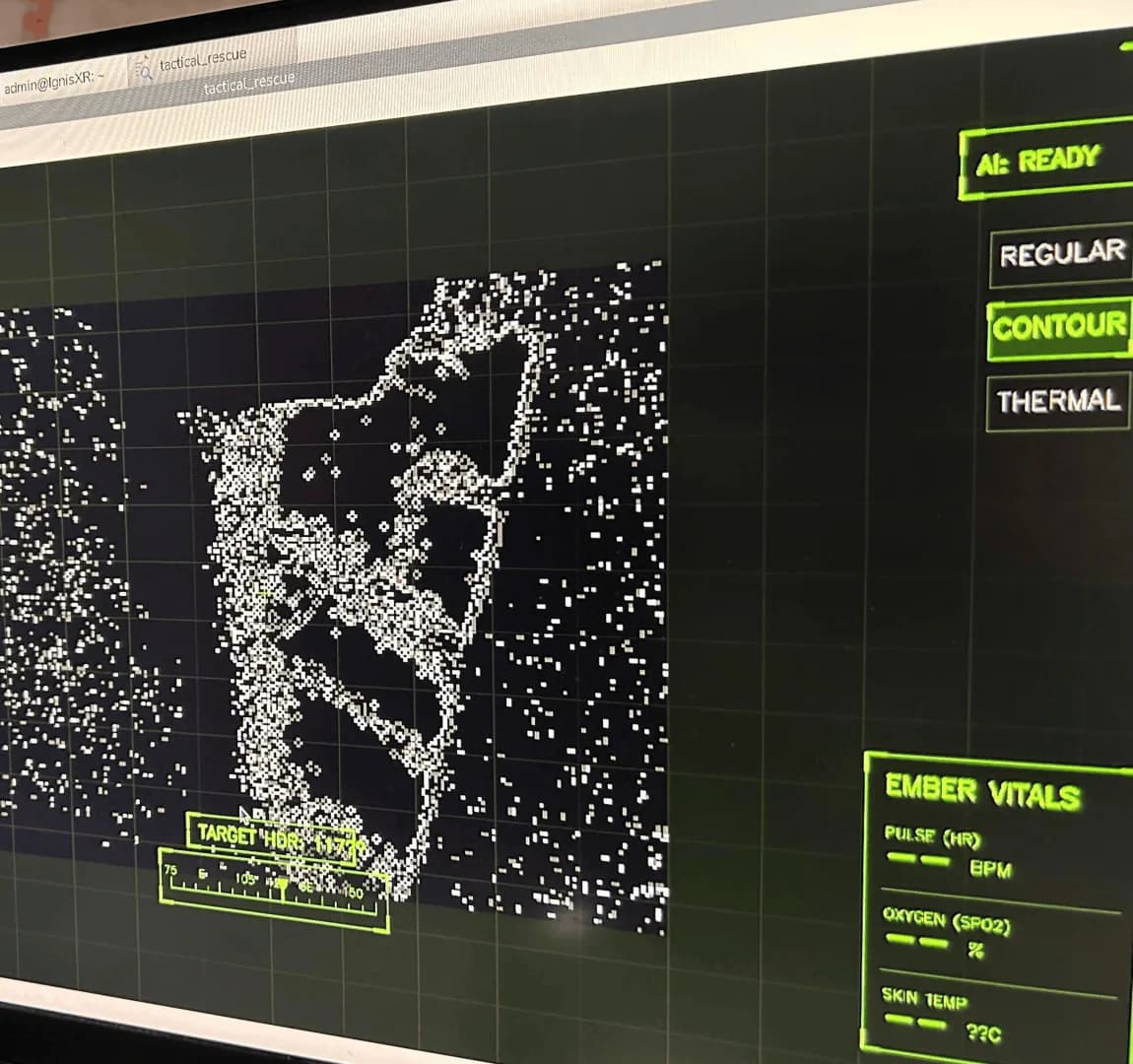
Scan, mode, and a crew vitals block — pulse, oxygen saturation, skin temperature, heading — share a single overlay, so nothing competes for the responder's attention.
The Ecosystem
Ember is the first piece of a connected platform — headset, command dashboard, and shared spatial map working as one. What each responder sees, the whole team sees.
Map the building as you move through it, track every crew member's position, and see heat through the smoke before you reach it.
Thermal signatures and spatial breadcrumbs guide teams to victims in collapsed, flooded, or pitch-black environments.
Overlay live sensor readings and hazard zones onto the real world, keeping responders oriented and a safe distance from threats.
In The Field
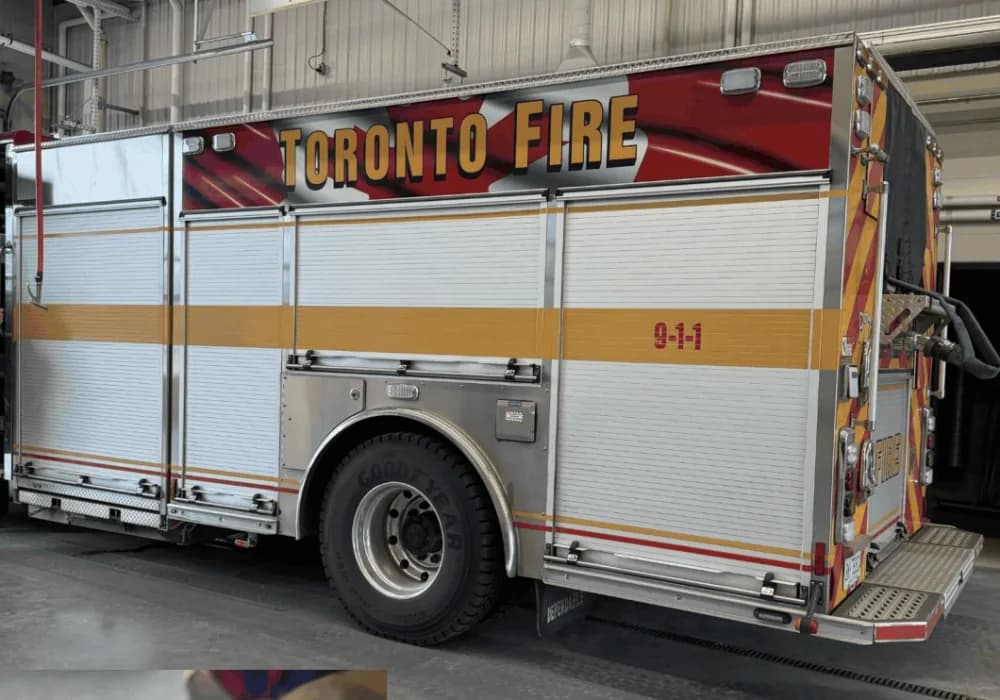
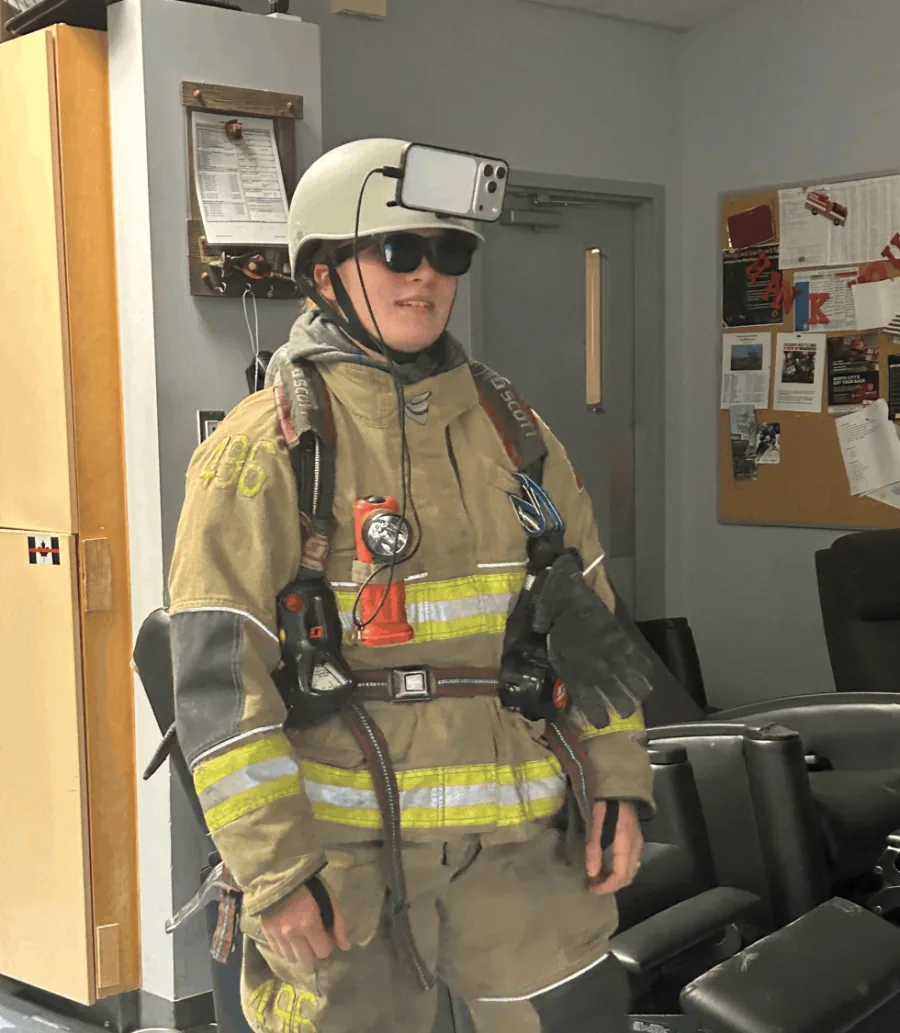
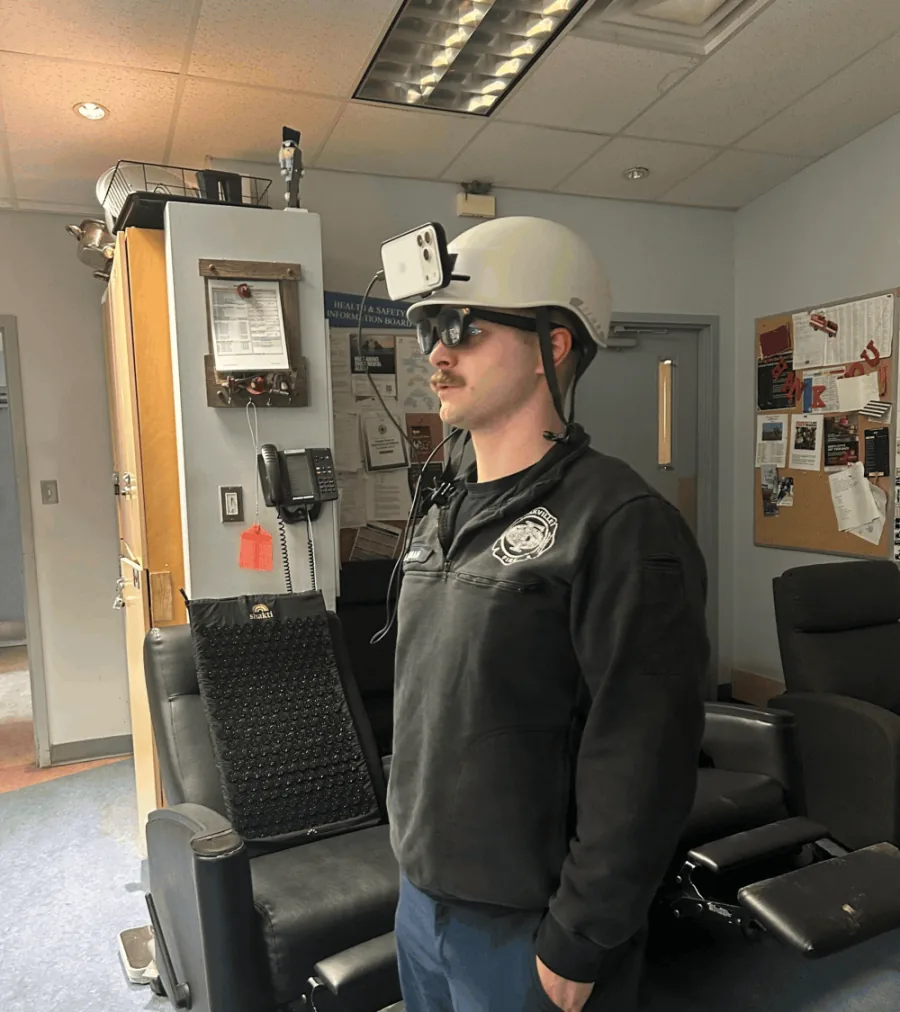
We take Ember into fire halls and put it on the people who would actually carry it. Every session sends us back with changes — where the weight sits, what belongs in the overlay, and what would just get in the way at three in the morning.
Firefighters already carry a handheld thermal camera. The bar isn't whether we can show them heat — it's whether we can show it without taking a hand or an eye away.
Where We Are
Ember started as a hackathon build and became a company. The rig you scrolled through is the real thing — a standard MSA SCBA mask carrying our sensor module, compute, and heads-up display.
Named a top-three team at the Google Solution Challenge North America Demo Day.
Google Build with AI Track and the SPUR Founder Track, in the same weekend.
Invited to present Ember at Google's New York office alongside the other top teams.
Running field research with working fire departments to shape what Ember becomes.
Yves Donato · George Farag · Rita Zhang · Taimoor Aleem
Building out of Toronto, Canada.

Get Early Access
We're partnering with forward-looking departments to shape Ember in the field. Join the waitlist to be first in line for pilot access and product updates.